Making the Right Choice: Comparing Fixed-Rate and Variable-Rate Home Equity Loans

If you’re planning to borrow against your home’s equity, one of the first decisions you’ll need to make is whether to choose a fixed-rate or a variable-rate home equity loan. Each loan type affects your monthly payments, the total cost of borrowing, and your ability to manage repayment over time.
At Sprint Funding, we help homeowners understand their options clearly, so they can make informed decisions that support their financial goals.
Let’s look at how fixed and variable-rate home equity loans work, how they differ, and what to think about when deciding which option is right for you. If you’re still unsure, https://sprintfunding.com/contact/ us today — our team is here to guide you every step of the way.
A fixed-rate home equity loan allows you to borrow a lump sum against your home’s equity at a set interest rate. The rate remains the same for the entire term of the loan, which means your monthly payments stay consistent.
Fixed-rate home equity loans are often used for one-time expenses, like home improvements, debt consolidation, or medical bills. They’re ideal for borrowers who want predictable payments and a clear payoff schedule.
 Why Borrowers Choose Fixed Rates
Because fixed rates don’t change, they help you plan your finances without surprises. This is especially helpful for homeowners managing tight monthly budgets.
Fixed-rate home equity loans generally have higher starting interest rates compared to variable-rate alternatives. If market rates fall, your rate—and your payments—stay the same unless you refinance.
A variable-rate home equity loan, more commonly structured as a Home Equity Line of Credit (HELOC), offers an interest rate that changes over time. The rate is typically tied to a benchmark index, such as the U.S. prime rate, and may adjust monthly or quarterly.
These loans often include a lower introductory rate that applies during an initial “draw period” (often 5–10 years), followed by a repayment phase where rates can fluctuate.
Variable-rate loans work well for short-term borrowing goals or for homeowners who plan to repay the loan before rates increase.
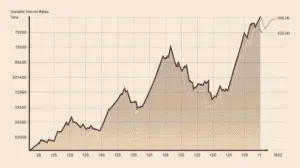
Because rates are not locked in, your payments may rise over time. While most lenders impose caps—limits on how much your rate can increase at once and over the loan’s lifetime—there is still a chance your interest rate could increase well beyond your starting point.
For example, if the prime rate rises by 1% and your margin is 1.5%, your new rate would reflect that change at the next adjustment period. Lenders typically set lifetime caps around 18%, but even small increases can impact monthly affordability if you’re unprepared.
Choosing between fixed and variable-rate home equity loans depends on how long you plan to borrow, your comfort with changing monthly payments, and your expectations about future interest rates.
Here are some questions to think about:
If you plan to pay off the loan within a few years, the savings from a variable-rate structure may outweigh the risks. If you’re taking out a long-term loan, a fixed-rate option can provide peace of mind.
When deciding which loan type fits your needs, lenders also evaluate several financial factors that may affect your rate, approval, and available loan amount.
A higher credit score generally qualifies you for better rates on both fixed and variable options. Many lenders require a minimum credit score of 620–680 for home equity products, with better terms available at scores above 700.
 Loan-to-Value Ratio (LTV)
Lenders calculate your LTV by comparing your current mortgage and desired loan amount against your home’s value. Many lenders cap LTV at 85%, though some go up to 90%.
Your DTI shows how much of your monthly income goes toward debt. Most lenders prefer a DTI below 43%, though some allow slightly higher ratios with compensating factors like strong credit.
Stable income is important regardless of loan type. Lenders may ask for tax returns, W-2s, or bank statements to verify your ability to repay—especially if you’re applying for a variable-rate loan with payment fluctuation potential.
The type of interest rate you choose will shape your financial experience for the length of the loan. A fixed rate locks in stability, while a variable rate might save money early but adds the potential for change.
When comparing fixed-rate vs variable-rate home equity loans, it’s not about which one is better for everyone—it’s about which one fits your situation. Understanding how each structure works puts you in a stronger position to make an informed, confident choice.
Not sure which direction to take?
At Sprint Funding, we help homeowners evaluate their options based on real numbers, not guesswork. Whether you’re leaning toward fixed payments or want to take advantage of a lower initial rate, we’ll help you sort through your choices and move forward with clarity.
Call us today to get expert support and start your loan process with confidence.
©2026 Sprint Funding, Inc. All Rights Reserved | NMLS ID: 348300