
You can qualify for an FHA loan after bankruptcy or foreclosure once specific waiting periods pass. Chapter 7 bankruptcy requires a two-year wait. Chapter 13 bankruptcy may allow approval after one year of on-time payments. Foreclosure requires a three-year waiting period. Rebuilding credit and saving for a down payment during this time improves your approval odds.
A bankruptcy or foreclosure on your record does not mean homeownership is out of reach. Thousands of borrowers qualify for an FHA loan after bankruptcy every year, and you can too once you understand the requirements.
The Federal Housing Administration designed its loan program specifically to help people in your situation get back on track. Let’s walk you through waiting periods, credit requirements, and the steps you can take right now to prepare for approval.
What Is an FHA Loan and Why Does It Help After a Credit Event?
An FHA loan is a mortgage backed by the Federal Housing Administration, a government agency that insures loans made by approved lenders. This insurance protects lenders from losses if borrowers default, which allows lenders to approve borrowers with lower credit scores, smaller down payments, and past credit problems like bankruptcy or foreclosure.
The Federal Housing Administration created this program to help more Americans become homeowners. Because the government shares some of the risk, lenders feel comfortable working with buyers who might not qualify for conventional loans. This makes FHA loans one of the most accessible paths back to homeownership after financial hardship.
FHA loans require a minimum down payment of 3.5% for borrowers with credit scores of 580 or higher. Borrowers with scores between 500 and 579 may still qualify with a 10% down payment. These flexible requirements make FHA loans popular among first-time buyers and those rebuilding after difficult financial situations.
How Long After Bankruptcy Can You Get an FHA Loan?
The waiting period for an FHA loan after bankruptcy depends on which chapter you filed. Chapter 7 bankruptcy requires a two-year waiting period from the discharge date. Chapter 13 bankruptcy may allow approval after just one year if you have made 12 months of on-time payments and receive court permission to take on new debt.
Chapter 7 Bankruptcy Waiting Period
Chapter 7 bankruptcy, sometimes called liquidation bankruptcy, wipes out most unsecured debts. The FHA requires borrowers to wait two years from the discharge date before applying for a new mortgage. During this time, you should focus on rebuilding credit, saving for a down payment, and establishing stable employment.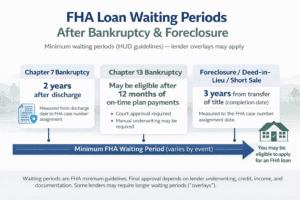
The two-year clock starts from your discharge date, not your filing date. Your discharge date appears on the court documents you received when your bankruptcy case closed. Keep these documents in a safe place because your lender will need them during the application process.
Chapter 13 Bankruptcy Waiting Period
Chapter 13 bankruptcy works differently because it involves a repayment plan rather than immediate debt elimination. The FHA allows borrowers in an active Chapter 13 plan to apply for a mortgage after making 12 months of on-time payments. You must also get written permission from the bankruptcy court trustee overseeing your case.
This shorter waiting period exists because Chapter 13 filers demonstrate financial responsibility by sticking to their repayment plans. Lenders view this positively when evaluating your application. After your Chapter 13 case closes through discharge, the standard two-year waiting period applies from that discharge date.
How Long After Foreclosure Can You Get an FHA Loan?
The FHA requires a three-year waiting period after foreclosure before you can qualify for a new FHA-insured mortgage. This waiting period begins on the date your previous lender completed the foreclosure sale or the date you transferred the property deed, whichever applies to your situation.
Foreclosure appears on your credit report for seven years, but the FHA only requires you to wait three years before applying. During this waiting period, focus on rebuilding your credit score, maintaining steady employment, and saving money for your down payment and closing costs.
Some borrowers experienced both bankruptcy and foreclosure during the same financial crisis. If your foreclosure happened as part of a Chapter 7 bankruptcy, your waiting period follows the foreclosure timeline of three years from the completed foreclosure date. The FHA uses whichever event ended later as your starting point.
Extenuating Circumstances Exception
The FHA may reduce the three-year foreclosure waiting period to one year if you experienced extenuating circumstances beyond your control. Qualifying events include job loss due to employer closure, serious illness requiring expensive medical treatment, death of a wage earner in your household, or divorce where you could not maintain payments alone.
You must document these circumstances thoroughly with evidence like medical bills, death certificates, divorce decrees, or employer closure notices. The lender and FHA underwriter review this documentation to determine if your situation qualifies for the reduced waiting period.
Ready to find out if you qualify for an FHA loan after bankruptcy or foreclosure? Our Mortgage Loan Advisors at Sprint Funding specialize in helping borrowers navigate challenging credit situations. Call 760-849-4475 for a free consultation.
What Credit Score Do You Need for an FHA Loan After Bankruptcy?
The FHA requires a minimum credit score of 500 for loan approval, though most lenders set their own minimums between 580 and 620. Borrowers with scores of 580 or higher qualify for the 3.5% minimum down payment. Scores between 500 and 579 require a 10% down payment.
After bankruptcy or foreclosure, your credit score likely dropped significantly. Most people see their scores fall by 100 to 200 points following these events. The good news is that credit scores can recover faster than many people expect, especially with deliberate rebuilding efforts.
Focus on these credit-building strategies during your waiting period:
- Pay all current bills on time every month
- Keep credit card balances below 30% of your limits
- Avoid opening too many new accounts at once
- Check your credit reports for errors and dispute any inaccuracies
- Consider a secured credit card to rebuild positive payment history
Many borrowers improve their credit scores by 50 to 100 points within the first year after bankruptcy discharge. Consistent positive behavior can push your score into FHA-qualifying range well before your waiting period ends.
What Documents Will You Need to Apply?
Lenders require specific documentation to verify your bankruptcy or foreclosure history and confirm your current financial situation. Gathering these documents early makes the application process smoother and faster. Here is what you should prepare:
Bankruptcy Documentation:
- Bankruptcy petition (all schedules)
- Discharge notice
- List of creditors included in bankruptcy
- Explanation letter describing circumstances
Foreclosure Documentation:
- Foreclosure completion notice or deed transfer
- Final mortgage statement from previous lender
- Explanation letter describing circumstances
Standard Application Documents:
- Two years of tax returns
- Two years of W-2 forms
- 30 days of pay stubs
- Two months of bank statements
- Government-issued identification
Your explanation letter matters more than many borrowers realize. This letter tells your story in your own words, explaining what led to your financial difficulties and what you have done to recover.
Lenders want to see that you understand what happened and have taken steps to prevent similar problems in the future.
How Can You Strengthen Your FHA Loan Application?
Strong applications include more than just meeting minimum requirements. Lenders look at your complete financial picture when making approval decisions. Taking specific steps during your waiting period positions you for success when you apply.
Build Your Savings
Save as much as possible for your down payment and closing costs. While FHA loans only require 3.5% down, having additional savings demonstrates financial stability. Lenders also verify that you have cash reserves to cover unexpected expenses after closing.
Maintain Stable Employment
Lenders prefer borrowers with at least two years of steady employment in the same field. Job changes are acceptable if you stay in the same industry or move to higher-paying positions. Avoid employment gaps during your waiting period when possible.
Keep Your Debt Low
Your debt-to-income ratio compares your monthly debt payments to your gross monthly income. FHA guidelines typically prefer ratios below 43%, though borrowers with strong compensating factors may qualify with ratios up to 50% or higher. Paying down existing debt before applying improves your ratio and increases your purchasing power.
Establish New Credit Carefully
Opening one or two new credit accounts helps rebuild your credit history, but avoid taking on too much new debt. A secured credit card or credit-builder loan can help establish positive payment history without creating significant debt obligations.
Wondering how to prepare for your FHA loan application? Sprint Funding offers free consultations to help you create a plan for homeownership after bankruptcy or foreclosure. Contact us at 760-849-4475 to speak with a Mortgage Loan Advisor.
What Are the Current FHA Loan Limits?
FHA loan limits vary by county and change annually based on home price trends. For 2025, the standard FHA loan limit for single-family homes in most areas is $524,225. High-cost areas like San Diego County, Los Angeles County, and the San Francisco Bay Area have higher limits reaching up to $1,209,750.
These limits affect how much home you can purchase with an FHA loan. If you need financing above your county’s limit, you may need to save a larger down payment to reduce your loan amount or explore other loan programs once your credit fully recovers.
Your Mortgage Loan Advisor can look up the specific FHA loan limit for the county where you plan to buy. This information helps you set realistic expectations for your home search and budget planning.
What Happens After Your Waiting Period Ends?
Once your waiting period passes, you can begin the FHA loan application process. The timeline from application to closing typically runs 30 to 45 days, though complex situations may take longer. Here is what to expect:
- Pre-Approval: Your lender reviews your credit, income, and documentation to determine how much you can borrow. Pre-approval letters strengthen your offers when you find a home you want to purchase.
- House Hunting: Search for homes within your pre-approved price range. Work with a real estate agent who understands your timeline and goals.
- Purchase Agreement: Once you find a home and the seller accepts your offer, you enter a purchase contract with specific timelines for inspections, appraisals, and closing.
- Underwriting: The lender’s underwriting team verifies all your information and reviews the property appraisal. They may request additional documentation during this phase.
- Closing: You sign final loan documents, pay your down payment and closing costs, and receive the keys to your new home.
The process works the same whether you had a bankruptcy, foreclosure, or both. Your past credit event becomes less significant to underwriters once you meet all current FHA guidelines and demonstrate financial recovery.
Frequently Asked Questions
Can I get an FHA loan while still in Chapter 13 bankruptcy?
Yes, the FHA allows borrowers in active Chapter 13 bankruptcy to apply after making 12 consecutive on-time plan payments. You must also obtain written permission from your bankruptcy court trustee. This permission confirms that taking on new mortgage debt will not interfere with your repayment plan obligations.
Does a short sale affect my FHA loan eligibility differently than foreclosure?
Short sales carry the same three-year waiting period as foreclosures under FHA guidelines if you were in default at the time of sale. Borrowers who remained current on all mortgage and installment payments during the 12 months before the short sale may qualify for a new FHA loan without a waiting period. A short sale also typically causes less damage to your credit score than a foreclosure, which can improve your chances of approval.
Will my bankruptcy or foreclosure show on the FHA loan application?
Yes, the FHA loan application asks about bankruptcy and foreclosure history within the past seven years. You must answer honestly because lenders verify this information through credit reports and public records. Attempting to hide past credit events can result in loan denial or fraud charges.
Can I use gift funds for my FHA down payment after bankruptcy?
Yes, FHA loans allow gift funds from family members, employers, or approved down payment assistance programs for part or all of your down payment. You must document the gift with a signed gift letter confirming the funds are not a loan. This option helps borrowers who struggled to save during their financial recovery period.
Do all lenders offer FHA loans to borrowers with past bankruptcy or foreclosure?
No, individual lenders set their own requirements beyond FHA minimums. Some lenders specialize in working with credit-challenged borrowers, while others prefer applicants with clean credit histories. Sprint Funding works with borrowers recovering from bankruptcy and foreclosure. Contact us to discuss your specific situation.
How does a deed-in-lieu of foreclosure affect my waiting period?
A deed-in-lieu of foreclosure, where you voluntarily transfer property ownership to your lender to avoid foreclosure proceedings, follows the same three-year waiting period as a standard foreclosure under FHA guidelines. The waiting period begins from the date of the deed transfer recorded in public records.
Can I refinance into an FHA loan after my waiting period if I currently have a non-FHA mortgage?
Yes, borrowers can refinance into an FHA loan after their waiting period ends, provided they meet current FHA guidelines, including credit score requirements and debt-to-income ratios. Refinancing into an FHA loan may help borrowers who obtained higher-rate mortgages during their credit recovery period secure better terms.