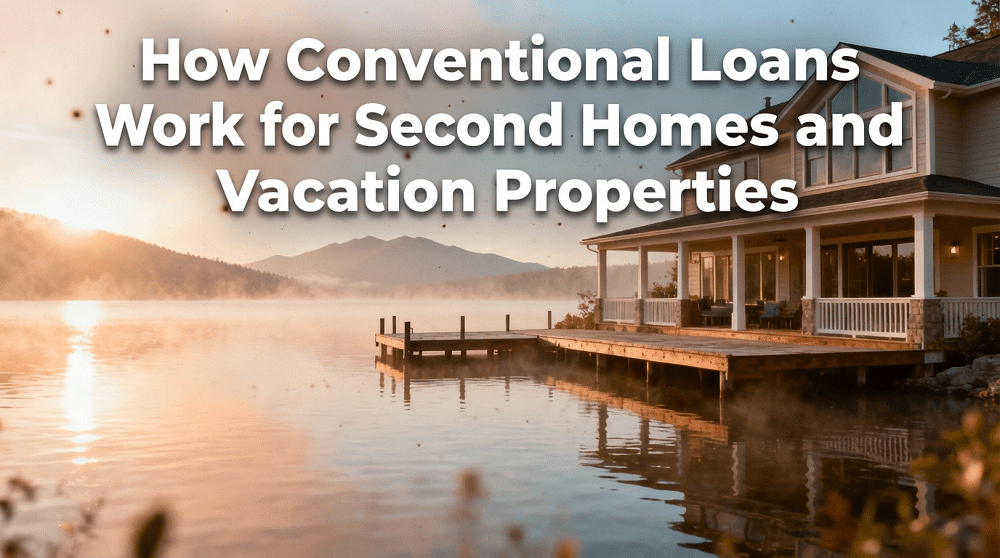
Conventional loans for second homes work like primary home loans but demand stricter criteria: higher down payments (often 10-25%), stronger credit (620+), more cash reserves (6-18 months), and slightly higher interest rates than primary homes but lower than investment properties, requiring lenders to verify you can afford both mortgages plus expenses, often with rules like the home being a certain distance from your primary residence.
Owning a vacation home or second property in your favorite destination is a goal many families share. Whether it’s a cabin in the mountains, a cottage by the lake, or a condo near the beach, having a personal retreat offers both lifestyle benefits and long-term financial potential. For many buyers, a conventional loan for a second home provides the most straightforward path to ownership.
At Sprint Funding, we’ve helped borrowers finance second homes and vacation properties since 2006. If you’re considering a second home and want personalized guidance from experienced loan professionals, contact our team today for a free consultation to discuss your financing options.
This guide covers the basics of second home mortgage requirements, including down payments, credit considerations, interest rates, and the application process.
What Is a Second Home Under Conventional Loan Guidelines?
Understanding how lenders classify a second home is the first step in the financing process. This classification directly affects your loan terms, down payment, and interest rate.
Definition of a Second Home
A second home (also called a vacation home) is a property you occupy for part of the year as a personal residence. Generally speaking:
 It is not your primary dwelling
- It is not used primarily as a rental property
- You intend to use the home yourself for vacations, weekends, or seasonal living
Distance and Location Considerations
Lenders evaluate whether the location makes logical sense for personal use as a second home. Properties in resort areas, near beaches, lakes, or ski slopes, are more easily classified as second homes. If the property is located very close to your primary residence, underwriters may question whether it’s truly a vacation home or an investment property.
Second Home vs. Investment Property
This distinction impacts your financing terms. Second homes are purchased for personal use and typically have more favorable loan terms than investment properties, which are purchased primarily to generate rental income. Investment properties generally require larger down payments and carry higher interest rates.
If you plan to rent your vacation property frequently, lenders may reclassify it as an investment property.
Down Payment and Credit Considerations
Conventional loans for second homes generally have stricter qualification standards than primary residence loans. Lenders view second homes as higher risk because borrowers facing financial difficulty tend to prioritize payments on their primary residence first.
Down Payment
Second home purchases typically require a larger down payment than primary residences. The exact amount depends on your credit profile, the lender’s requirements, and the specifics of your financial situation. Putting more money down often results in better interest rates and loan terms.
Credit Profile
Lenders evaluate your credit history when determining eligibility and pricing. A stronger credit profile generally qualifies you for better rates and terms. Your overall financial picture, including income, assets, and debt levels, will also factor into the approval decision.
Debt-to-Income Ratio

Lenders compare your monthly debt obligations to your gross monthly income. This ratio must fall within acceptable limits, accounting for both your current housing expenses and the projected second home payment.
Reserves
Lenders typically require proof of liquid assets to cover mortgage payments. Acceptable reserves may include savings accounts, money market funds, and investment accounts.
Interest Rates and Loan Terms
Interest rates on second home loans are generally higher than rates for primary residences. The exact difference depends on market conditions, your credit profile, down payment amount, and the lender’s pricing structure.
Common loan term options include fixed-rate mortgages and adjustable-rate mortgages. Your loan advisor can help you compare options and determine which loan term best fits your financial goals.
The Application Process
The application process for financing a vacation home follows steps similar to primary residence loans. Your lender will request documentation to verify your income, assets, employment, and existing debts.
The timeline and specific requirements vary based on individual circumstances and the property involved. Working with an experienced loan professional helps the process move smoothly from application to closing.
How to Strengthen Your Application
A well-prepared application can improve your chances of approval and may help you secure more favorable loan terms. Here are some steps to consider before and during the application process.
Before Applying
- Review credit reports and dispute any errors
- Pay down existing balances to improve your debt-to-income ratio
- Avoid opening new credit accounts before applying
- Hold off on large purchases that impact your financial profile
Building Financial Strength
 Accumulate reserves beyond minimum requirements
- Document income thoroughly, especially if self-employed
- Keep down payment funds in easily verifiable accounts
Working With Your Lender
- Be transparent about your intentions for the property
- Respond promptly to documentation requests
- Ask questions about any requirements that are unclear
Ready to Finance Your Second Home?
Financing a vacation property with a conventional loan offers a practical path to ownership for qualified buyers. Understanding the general requirements, preparing your finances, and working with experienced professionals makes the process more predictable and manageable.
Sprint Funding mortgage loan advisors bring expertise and personalized attention that second-home buyers deserve. Because every borrower’s situation is unique, we recommend speaking directly with our team to get accurate information tailored to your specific circumstances.
Call us today for a free consultation about financing your second home or vacation property.
Frequently Asked Questions
Can I Use a Conventional Loan for a Vacation Home?
Yes. Conventional loans are one of the most common financing options for vacation homes. Contact Sprint Funding to discuss your eligibility and explore available options.
What Is the Down Payment for a Second Home?
Second homes typically require a larger down payment than primary residences. The exact amount varies based on your credit profile, the lender, and your overall financial situation. Your Sprint Funding advisor can provide specific guidance based on your circumstances.
Are Interest Rates Higher for Second Homes?
Generally, yes. Interest rates on second home mortgages tend to be higher than rates for primary residences. Current rates depend on market conditions and your individual financial profile. Contact us to learn about rates available to you.
Can I Use an FHA or VA Loan to Buy a Second Home?
FHA, VA, and USDA loans are generally restricted to primary residences. To finance a vacation home, most buyers use a conventional loan. Speak with a Sprint Funding advisor to discuss your financing options.
What Credit Score Do I Need for a Second Home Mortgage?
Credit requirements vary by lender and loan program. A stronger credit profile generally qualifies you for better rates and terms. Your Sprint Funding loan advisor can evaluate your situation and discuss your options.
Can I Rent Out My Second Home?
Rental policies depend on how the property is classified. If rental income becomes the primary purpose, lenders may classify the property as an investment rather than a second home, which affects your financing terms. Discuss your plans with your loan advisor to understand how this may impact your loan.
How Do I Know If I Qualify for a Second Home Loan?
Qualification depends on several factors, including your credit history, income, existing debt, and available assets. The best way to determine your eligibility is to speak with a loan professional who can review your complete financial picture. Contact Sprint Funding for a personalized assessment.