Construction loan approval depends on two things working together: a borrower who meets the lender’s financial standards and a builder who meets the lender’s project standards. Lenders require a credit score of at least 620, typically 680 or higher, a down payment of 20% or more, a debt-to-income ratio below 43%, and a licensed, lender-approved contractor before funds are released.
Construction Loan Approval: Key Requirements at a Glance
| Requirement | Typical Threshold |
| Minimum credit score | 620 (most lenders prefer 680–700+) |
| Down payment | 20%–25% of total project cost |
| Debt-to-income (DTI) ratio | Below 43% preferred; up to 45% possible with strong borrower profile |
| Loan term | 12–18 months (construction phase) |
| Funds disbursement | Staged draws tied to project milestones |
| Builder requirement | Licensed, insured, lender-approved contractor |
| Construction plan | Detailed blueprints, cost estimates, and timeline required |
| Interest during construction | Interest-only payments on disbursed amounts only |
| Contingency reserve | 10%–20% of total project budget; lean toward 20% for complex or custom builds |
Most people approach construction loans the way they approach a traditional mortgage: gather the financials, submit the application, and wait for a decision. That instinct will cost you time.
A construction loan is not a mortgage with a longer checklist. It is a different product governed by different risk logic. The property does not exist yet, which means the lender has no finished collateral to evaluate.
What they have instead is your financial profile, your builder’s credentials, and a detailed plan for turning raw land or an empty lot into something fundable. When any one of those three is weak, the deal stalls.
This guide covers what lenders actually look at during construction loan approval, from both the borrower’s side and the builder’s side, so neither party walks into the process unprepared.
How Construction Loans Work Differently from Traditional Mortgages
The most common misconception about construction loan requirements is that they mirror a home purchase loan with a few extra documents. They do not.
With a traditional mortgage, the lender funds a lump sum against a finished, appraised property. With a construction loan, funds are disbursed in stages, called a draw schedule, tied directly to verified milestones in the build. Foundation poured? Draw released. Framing complete? Another draw released. The lender or a third-party inspector confirms each milestone before money moves.
During the construction period, borrowers make interest-only payments on the amounts disbursed, not on the full loan balance. That keeps monthly costs manageable while the project is underway. Once construction is complete, the loan either converts to a permanent mortgage or is paid off with a new one, depending on which loan structure you chose at the outset.
That staged structure is what makes construction loans higher-risk in lender terms. There is no finished asset to protect them if something goes wrong mid-project: the contractor walks off the job, costs overrun the budget, permits get delayed. Every one of those scenarios becomes the lender’s problem if the borrower defaults. So they compensate by requiring more from the borrower and more from the builder.
What Borrowers Need to Qualify
Credit Score and Financial History
Start here. Most lenders require a minimum FICO score of 620 to consider an application, but that number rarely produces favorable terms. Lenders typically want 680 or higher to extend competitive rates, and some will push that threshold to 700 or above for larger custom builds.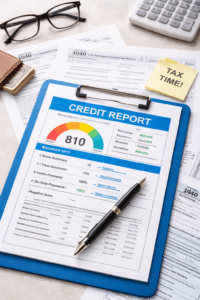
A higher score matters here more than it does in conventional lending because construction loans carry variable rates tied to the prime rate. A lower score does not just raise your rate. It can narrow the pool of lenders willing to work with you at all.
Review your credit report before applying. Resolve any errors. Pay down revolving balances. Do not open new accounts in the months leading up to your application.
Down Payment
Plan for 20% minimum. That is the baseline across most lenders, and many require 25% for new builds. Some projects, particularly investment properties or complex custom construction, may demand 30% or more.
The reasoning is straightforward. The lender is funding a project, not buying a house. A substantial down payment signals that the borrower has real skin in the game and reduces the lender’s exposure if the project does not proceed as planned.
If you own the land outright, its appraised value can often count toward your equity position, which may offset some of the cash you need to bring.
Debt-to-Income Ratio
Your DTI ratio compares your total monthly debt obligations to your gross monthly income. Most construction loan lenders want that number below 43%. If your DTI is 50% or higher, you will likely need to resolve some existing debt before applying, or work with a broker who has access to lenders willing to consider compensating factors.
A concrete example: if your gross monthly income is $7,000, your total monthly debt payments, including the projected construction loan payment, should stay under $3,010 to meet a 43% threshold.
Income Documentation and Reserves
Expect to provide two years of tax returns, recent pay stubs or bank statements, and W-2s or 1099s. Self-employed borrowers should anticipate additional scrutiny on their income documentation.
Beyond income, lenders want to see cash reserves: funds available after the down payment and closing costs. Construction projects run into surprises. Price increases on materials, delays that extend the interest-only payment period, and unexpected permitting fees. Lenders want evidence that you can absorb those without defaulting.
What Builders Need to Bring to the Table

Here is where many borrowers get caught off guard. They qualify on paper, find a contractor they trust, and then discover the lender will not approve the builder.
That is not rare. It is a standard part of construction loan approval.
Licensing and Insurance
Every lender will require proof that the contractor holds a valid state-issued general contractor license. They will also require general liability insurance and workers’ compensation coverage, and they will verify both directly, not just take your word for it.
Some lenders maintain pre-approved builder lists. Working with a contractor already on that list can speed up underwriting considerably. If your preferred builder is not on the list, the vetting process adds time. That is not a dealbreaker, but it is a timeline consideration.
Track Record and References
Lenders want to see that your builder completes projects on time, within budget, and without construction defect claims. They will ask for references and may review past work documentation. A contractor with a strong portfolio and a clean professional history strengthens your application. A builder with a thin track record, no verifiable references, or unresolved complaints does the opposite.
The Builder Contract
Before submitting a construction loan application, you will need a signed contract with your builder. That contract should include a line-item project budget, a detailed construction timeline with phased milestones, and a payment schedule aligned with the draw structure. Lenders are not approving a handshake agreement. They are approving a specific plan with specific numbers.
If your builder resists providing that level of documentation, that tells you something important. Address it before closing, not after.
Choosing the Right Loan Structure
Not every construction loan works the same way. The structure you choose affects your closing costs, your rate stability, and how much paperwork you handle when the build is complete.
Construction-to-permanent loans, sometimes called one-time close loans, combine the construction phase and the permanent mortgage into a single loan with a single closing. Your rate is locked at the start, you go through underwriting once, and when construction is complete, the loan converts automatically to a traditional mortgage. For most owner-occupants building a primary residence, this is the simpler path.
Stand-alone construction loans cover only the build phase. When construction ends, you apply for a separate mortgage to pay off the construction loan. That means two closings and two sets of fees, but it also gives you flexibility. You can shop for mortgage terms independently once the home is finished, and you are not locked into the rate environment at the time you broke ground.
Owner-builder loans exist for licensed contractors who want to act as their own general contractor. These are less common and harder to qualify for, because the borrower/builder dynamic creates a conflict-of-interest risk that lenders evaluate carefully.
Veterans have an additional option worth knowing. VA loans vs. construction loans explains how VA construction financing offers zero-down options for eligible service members and veterans building a primary residence, without the mortgage insurance requirements that apply to conventional construction financing.
The Documentation Lenders Actually Want to See
Walk in with these items and the process moves faster. Walk in without them and expect delays.
From the borrower:
- Two years of federal tax returns
- Two months of bank statements
- Recent pay stubs (typically 30 days)
- A signed purchase contract for the land if not already owned
- Proof of homeowner’s insurance with builder’s risk coverage
From the builder and project:
- Signed construction contract with full line-item budget
- Architectural blueprints and specifications
- Construction timeline broken into milestones
- Builder’s license, liability insurance, and workers’ comp certificates
- Permit applications or approvals from the relevant municipality
Some lenders will order an appraisal based on the plans and estimated post-construction value before issuing approval. That “as-completed” appraisal determines your maximum loan amount. If the appraiser’s projected value comes in below your budget, you may need to reduce the scope of the project or increase your down payment to make the numbers work.
Common Mistakes That Delay or Kill Approval
- Choosing a builder first, then a lender. The lender approves the builder as part of the process. If your contractor does not meet lender standards, you are either starting over with a new builder or a new lender. Get lender pre-approval before signing a builder contract, or at least verify the builder’s qualifications against typical lender criteria before committing. For a deeper look at the preparation steps, see our guide on how to secure a construction loan.
- Underestimating the contingency budget. Most lenders and experienced contractors recommend building a 10% to 20% contingency into the total project budget, with more complex or custom builds warranting the higher end of that range. Industry data shows that roughly one in three custom home projects exceeds the initial budget by at least 10%, and tariff-driven material cost increases through 2025 have pushed that exposure higher. Showing up with a budget that has zero cushion raises questions about whether the borrower has thought this through.
- Applying with an unresolved credit issue. A collection account, a dispute, or a significant drop in score right before application can pause or derail underwriting. Check your credit three to six months before you plan to apply.
- Not getting pre-approved before finalizing land. Pre-approval before land purchase tells you what you can actually borrow and at what terms. Buying land first and then discovering you cannot finance the construction at your target budget is a painful position.
Working with a Mortgage Broker on Construction Financing
Construction loans are a specialized product. Not every lender offers them, and the ones that do vary widely in their builder requirements, draw schedules, and conversion terms. Working with a mortgage broker experienced in construction lending means accessing multiple lenders through a single application, along with guidance on which structure and which lender fits your specific project.
A good broker will tell you upfront whether your builder qualifies, what documentation the underwriter will flag, and whether your budget creates any appraisal risk. That conversation before you apply is worth more than the one you have after a denial.
Sprint Funding has worked with borrowers and builders navigating construction loan financing since 2006, and can guide you through the structure, documentation, and lender selection process from the first consultation to closing day.
If your project is based in California, our detailed walkthrough on applying for a construction loan in California covers state-specific steps and requirements. For veterans, our team also specializes in VA construction financing that may eliminate the down payment requirement entirely.
The approval process is manageable when you understand what drives the lender’s decision and when both the borrower and the builder come to the table prepared.
Ready to Explore Construction Loan Options?
Sprint Funding works with builders and borrowers across the country to navigate construction loan approval. Whether you are building a primary residence, financing a custom home project, or working with clients who need construction financing, our team can help you evaluate loan structures, verify builder eligibility, and identify the lender that fits your timeline and budget.
Call us at 760-849-4475 for a free consultation, or contact us online to get started. There is no obligation, just a straightforward conversation about what your project needs and how to finance it.
Frequently Asked Questions
Can you get a construction loan if you already own the land?
Yes, and land ownership typically works in your favor. If the land is owned free and clear, its appraised value can contribute to your equity position, which may reduce the cash down payment required. If there is an existing mortgage on the land, that balance is usually folded into the total construction loan. Either way, your lender will order an independent appraisal of the land as part of the approval process.
What happens if construction costs go over budget?
The lender sets your loan amount based on the approved project budget and the as-completed appraisal. If costs exceed that amount, the overrun comes out of your pocket, not the lender’s. That is why most experienced builders and lenders recommend building a contingency of 10% to 20% into the initial budget, with the upper end applying to custom or complex projects. If overruns are substantial and you need additional funds, you may be able to modify the loan, but that process takes time and approval is not guaranteed.
Do construction loans cover the purchase of the land?
In most cases, yes. Construction-to-permanent loans and stand-alone construction loans typically include the cost of land acquisition along with construction costs, permits, and related fees. If you already own the land, those costs come off the total. Some specialty loan products exist solely to finance a land purchase without a construction plan attached, but those are a separate product and often have stricter terms.
How long does construction loan approval typically take?
Expect 30 to 60 days from application to closing, depending on the complexity of the project, how quickly documentation is submitted, and the lender’s underwriting queue. Projects with unusual designs, custom specifications, or builders requiring additional vetting tend to take longer. Starting the pre-approval process well before you need funds, ideally 60 to 90 days before your intended construction start date, gives you enough runway to handle delays without disrupting the project timeline.
Can a general contractor use a construction loan to build a spec home?
Yes, though the terms differ from owner-occupied residential construction. Spec home construction, where a builder constructs a property to sell rather than occupy, typically uses a commercial construction loan or a residential construction loan with investment property terms. Down payment requirements tend to be higher, often 25% to 30%, and the lender will pay close attention to the builder’s prior sales history and their ability to sell or carry the property if the market shifts. Builders pursuing spec construction regularly should contact us to discuss investor and developer financing options separately.